Start with what the job really includes
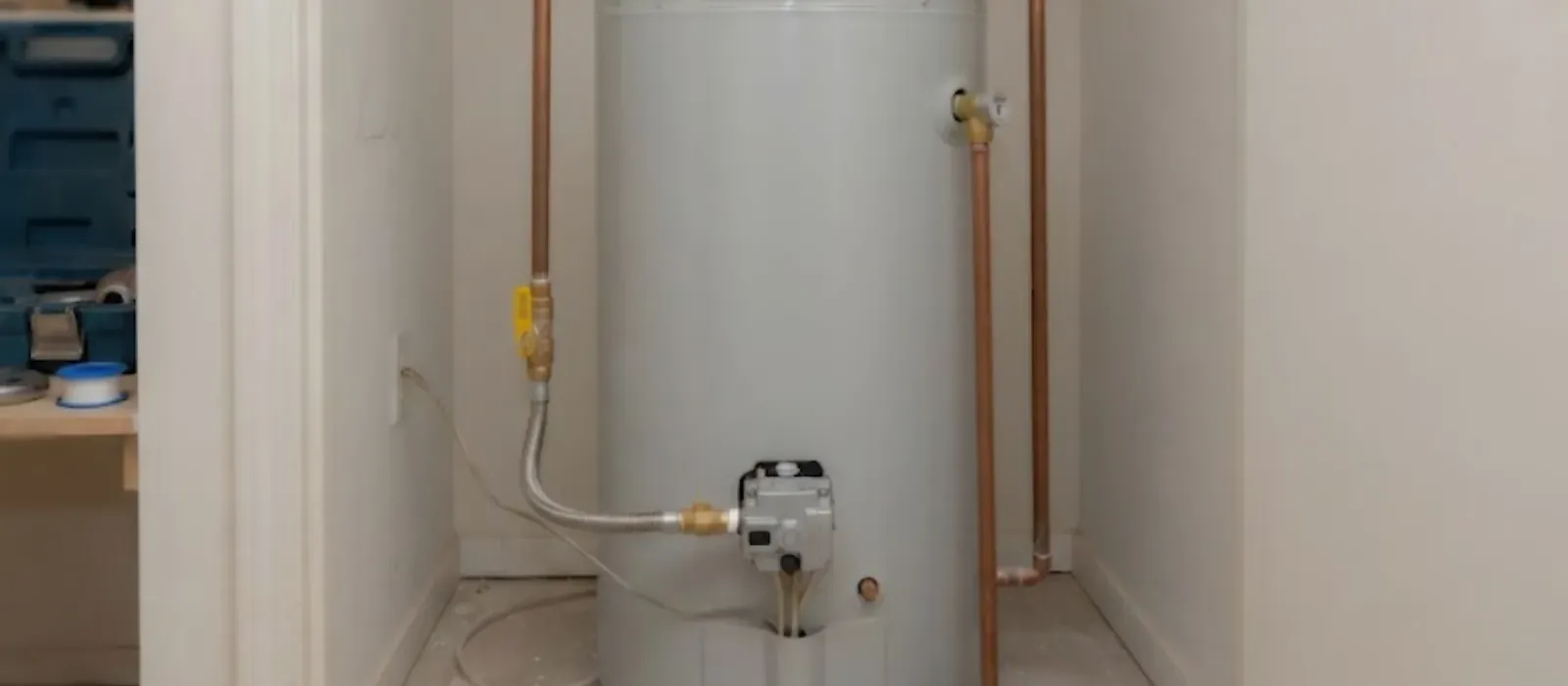
People price the tank and forget the rest. A proper install also needs shutoff valves, flexible or hard-piped connections, and a temperature and pressure relief valve with a discharge pipe. It may need a drain pan where the space calls for one. A unit that burns fuel also needs a safe way for exhaust gas to leave the house.
Each of those pieces has a failure mode if it is skipped or rushed. A missing shutoff turns a small leak into a flooded closet. A weak discharge pipe turns a relief valve into a scald risk. Plan for the whole assembly, not just the tank.
Electric, gas or heat pump: how the fuel choice compares
Fuel is the first decision because it changes the venting, the electrical or gas work, and the shape of your quote.
| Type | What it needs | Venting | Best fit |
|---|---|---|---|
| Electric tank | A dedicated 240-volt circuit and a correctly sized breaker | None, since nothing burns | Homes with no gas service and a tight utility closet |
| Natural gas or propane tank | A gas line, a shutoff, a sediment trap and a combustion air supply | A flue to the outdoors, sized and sloped correctly | Homes that already have gas lines and want fast recovery |
| Heat pump tank | A 240-volt circuit, a condensate drain and open air around the unit | None, but it needs room to breathe and a drain | Homes that want lower running cost and have space |
| Tankless | Large gas supply or heavy electrical service | Gas models need special stainless or plastic venting | Homes with steady demand and wall space |
Switching fuel is possible, but it adds electrical or gas work, and that changes the price more than the tank does.
Where the heater goes matters more than most people think
A heater in the garage, a closet or an attic all behave differently. Garage units sit near cars and tools, so they often need protection from impact and a stand that lifts any gas ignition source off the floor. Closet units need clearance for service and for air. Attic units are the riskiest, because a leak soaks insulation and ceiling drywall before anyone sees it.
If the old heater sits over finished floor or above a ceiling, a pan piped to a safe drain point is cheap protection. Ask the plumber where the relief valve discharge will end. It should run to a visible, safe spot, never into a wall or a dead end.
Sizing: tank gallons, first-hour rating and real use
Tank size is the number on the box, but the first-hour rating tells you how much hot water you get in the first hour of heavy use. That is the number that matters on a busy morning. A household of two rarely needs what a household of five does.
Count your peak hour. How many showers run back to back, whether the dishwasher or washer starts at the same time, and whether you have a large soaking tub. Wellington's average household is about 2.85 people, but your own pattern beats any average. A heater that is too small runs out. One that is too large wastes energy keeping extra water hot all day.
Planning a new water heater?
Call (561) 448-8545 to talk through fuel, size and location before you buy a tank.
Wellington permits are handled electronically
The Village of Wellington processes permits electronically through its Building Division, and the village's forms cite the Florida Building Code, 8th Edition (2023). The permit application also says a separate permit must be secured for plumbing. That line is about plumbing permits in general, not water heater swaps specifically.
Whether heater work needs a permit depends on the job, and the Building Division is the office that can answer for yours. Your plumber can describe what is typical, and having the answer before installation day avoids a delay.
Discharge piping, venting and clearances start with the manufacturer's instructions, so ask the plumber to show you the clearances planned for your closet or garage.
What a licensed install looks like, step by step
Here is the order a careful crew follows. If a quote skips several of these, ask why.
- 1
Shut off and drain the old unit
Power or gas goes off first, then the cold supply. The tank is drained to a floor drain or outdoors with a hose.
- 2
Disconnect and remove
Old connectors, flue pieces and the relief valve pipe come out. Corroded fittings are replaced, not reused.
- 3
Set and level the new heater
The unit goes on a stand or pan, level and clear of walls by the maker's required distances.
- 4
Connect water, venting and fuel
New shutoff valves, dielectric or flexible connectors, a relief valve with a discharge pipe, and a gas or electrical hookup that matches the unit.
- 5
Fill, purge and test
The tank fills with a hot tap open to push air out. Then the plumber checks every joint for drips and tests gas connections with leak solution.
- 6
Set the temperature and explain it
You should leave knowing where the shutoff is, where the relief valve discharges and what temperature the thermostat is set to.
What to have ready before the plumber arrives
A few minutes of prep keeps the visit short and the quote accurate.
- Find the data plateTake a photo of the label on your current heater. It lists capacity, fuel type and the model number.
- Know your shutoffsLocate the main water shutoff for the house and, for gas units, the gas shutoff.
- Plan for no hot waterMost installs take part of a day. Heat a pot of water for dishes and shower early or late.
Do it yourself or hire a licensed plumber?
Some homeowners are handy enough to swap a heater. Here is how the two paths compare.
Doing it yourself
- You save on labor, but you carry the risk of a leak, a bad gas joint or an unsafe flue.
- Ask the Building Division whether your job needs a permit and whether you may apply yourself.
- An error in venting can send exhaust gas into the house.
- A mistake can complicate an insurance claim later.
Hiring a licensed plumber
- Gas, water and venting work is done by someone licensed to do it.
- The plumber knows what the Building Division usually asks for and can say if a permit applies.
- You get a tested system and a working relief valve.
- You can check any license yourself with the Florida DBPR.
When to call a plumber for your water heater
If your heater is leaking, making rumbling noises, or has gone cold, call a licensed plumber rather than waiting. If the tank itself is the problem, our water heater installation team can plan the replacement with you. For a repair-or-replace question, the water heater replacement service page walks through how that decision is made.
When water is on the floor, shut off the cold supply to the heater, switch off the power or gas control, and dial (561) 448-8545 at any hour. For a home in Royal Palm Beach, the service area page lists the other towns we reach.
Questions homeowners ask
The Village of Wellington Building Division can say whether your work needs a permit. Permits are handled electronically, and the application lists plumbing as a separate permit.
Yes in many homes, but it is more than a swap. Going to gas needs a gas line and a flue. Going to electric needs a dedicated 240-volt circuit. Both change the cost and the schedule.
Match the first-hour rating to your busiest hour, not just the tank gallons on the box. Count showers, laundry and dishwasher use that overlap. A plumber can read your current unit's label and suggest a better fit.
If the tank overheats or overpressures, the valve opens and releases hot water. The pipe carries that water to a safe place so no one gets scalded and no wall gets soaked. It should end where you can see it.
Yes. In homes that are fifteen to forty-five years old (most Wellington homes), check the shutoffs, connectors and relief piping, not just the heater.
Ask for the license details and look it up on the Florida DBPR website using Verify a Licensee. Certified plumbing contractor numbers start with CFC, and registered contractors begin with RF.
Still have a question? Call (561) 448-8545