Plan the install before you buy the heater
Most homeowners shop for the heater first and discover the problems on install day. A tank that fits the box store shelf may not fit the closet, or the new model may need a vent, a drain path or an electrical circuit that is not there.
Settle four things up front: the fuel, the capacity, the spot it will live in, and who will hook it up. Once those are fixed, the price becomes a number you can compare rather than a guess.
Fuel and unit options side by side
Each type suits a different house. Use this as a starting point, then let the technician confirm what your home can support.
| Option | Where it fits | Watch for |
|---|---|---|
| Electric tank | Homes without gas service, or with a simple closet or garage space | Needs a dedicated circuit that handles the load |
| Gas tank | Homes with natural gas or propane already connected | Needs a clear flue and proper combustion air. Gas smell means leave and call the gas utility or 911. |
| Heat pump unit | Garages and large rooms with room to breathe | Needs clearance, a condensate path and space around it |
| Tankless | Families that want endless hot water and save floor space. Details on the tankless water heater page | Larger gas lines or electrical service may be needed |
Switching from one fuel to another changes the scope, not just the price, because venting, gas piping or wiring may need to move.
Where the heater lives matters more than most people think
Garage
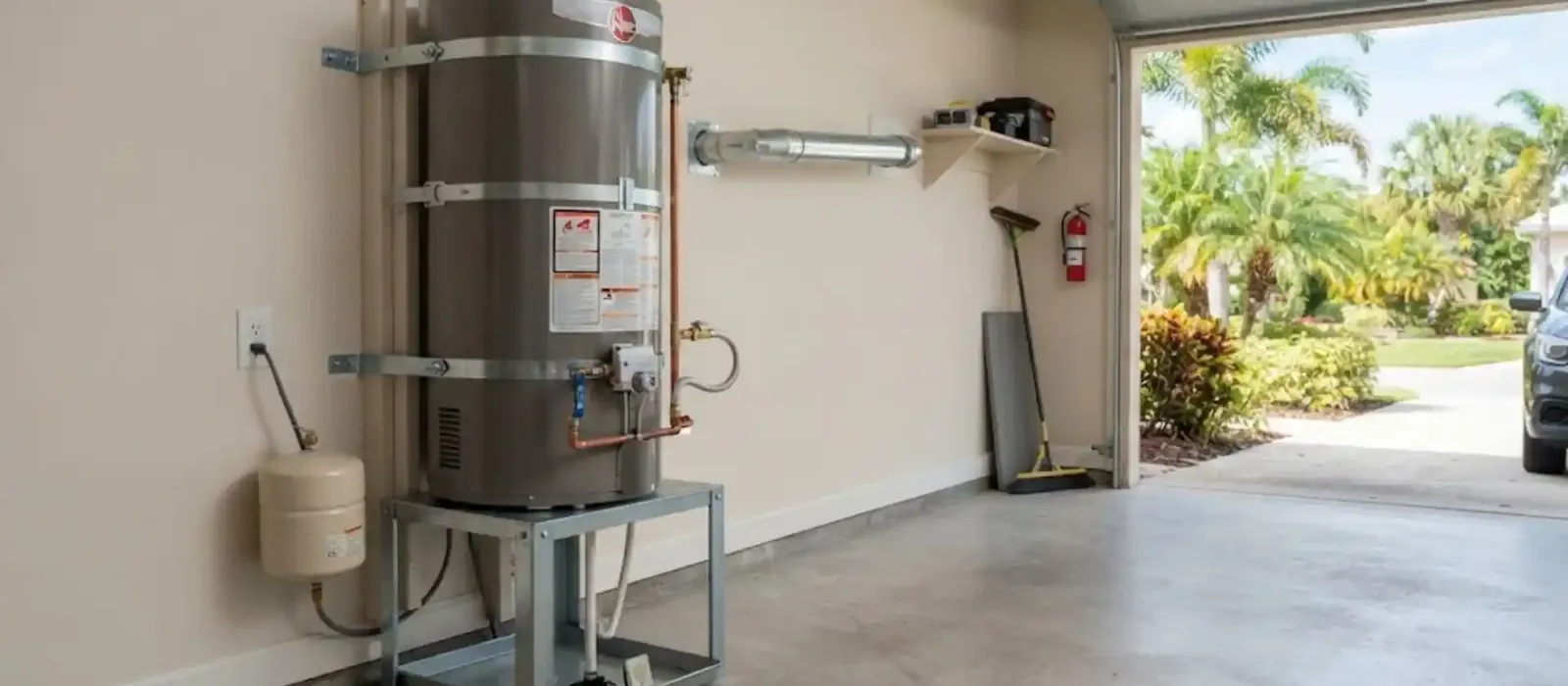
The easiest spot for service and drainage. It can be hot in summer and needs protection from vehicle bumps.
Closet or utility room
Convenient, but it needs enough clearance for the tank, the valves and the technician who works on it later.
Attic
A leak up high drips into ceilings. A drain pan and a plan for where overflow goes are worth discussing.
Exterior enclosure
Works for some setups, but weather and animals become part of the maintenance picture.
Plan access for a future replacement too. Heaters installed behind fixed walls get costly to swap.
Ready to plan your heater?
Bring your data label photo and a plumber can match specs.
What happens on install day
A standard swap in an accessible spot usually takes part of a day. Complex moves take longer.
- 1
Walk-through and price
The technician reviews the space, checks the old connections and gives you the full price before touching anything.
- 2
Shut down and drain
Power or gas is off, water is closed and the old tank is drained.
- 3
Set the new heater
It goes on a level base with the right clearances and a safe discharge path for relief water.
- 4
Make the connections
Water lines, shutoff valves, power or gas, and venting are connected and checked.
- 5
Fill, test and explain
The tank is filled before it is energized, run through a heat cycle and tested for leaks. You get a short tour of the controls and shutoffs.
Check the license before you sign
Florida law treats unlicensed contracting as a crime, and a contract signed with an unlicensed contractor cannot be enforced by that contractor. A business tax receipt is not a license. Certified plumbing contractor numbers begin with CFC, and you can look any one up through the state's Department of Business and Professional Regulation.
For a heater that connects to gas or sits in an attic or enclosed closet, a 30-second license check is cheap protection. Ask for the number, look it up, and match the name before the old tank comes out.
Before the installer arrives
- Clear a path from the door to the heater, about three feet wide.
- Move stored boxes and paint cans away from the old unit.
- Photograph the data label so the technician can match the specs.
- Know where the main water shutoff is and that it turns.
- Plan for a short stretch without hot water, usually part of a day on a standard swap.
- Have a question list ready about warranty terms on the unit you choose.
If the old heater already failed and you need a swap today, read about water heater replacement instead.
What goes into the price of an installed heater
The sticker on the tank is only part of the bill. Labor, parts and any code-related changes move the final figure.
Warranty terms vary by manufacturer. Ask what the warranty covers and who handles claims. Keep the paperwork.
Pairing a new heater with the rest of the plumbing
A heater install is a good moment to look at everything around it. Old flexible supply lines, a corroded shutoff and a missing drain line are cheap to fix while the tank is out. For larger projects, such as new fixtures or a remodel, see plumbing installation.
Questions homeowners ask
A like-for-like swap in an easy spot usually takes part of a day. Moving the heater, changing fuel or adding a vent takes longer. The technician gives a time window after seeing the space.
Size depends on how many people use hot water at the same time. Average household size in Wellington is about 2.85 people, but a busy family bathroom morning matters more than the average. A technician can size it on site.
Often yes, but the work changes. Gas piping and venting may be capped, and an electric circuit may need to be added. We price that before starting.
Rules vary by job. Ask the Village of Wellington Building Division. Wellington's page says the new small-job exemption does not cover plumbing work.
Yes. We drain, disconnect and remove the old tank as part of the visit.
Shut off the cold inlet and power or gas, then call. The line is open 24 hours a day, and a failed tank can be replaced through our water heater replacement service.
Yes. The Royal Palm Beach page lists the ZIPs we cover there.
Still have a question? Call (561) 448-8545