An urgent backup: when a clog keeps coming back
Hydro jetting is a heavy tool, so it is the answer to a particular kind of urgent problem. A line that has been snaked three times this year and clogs again is a good candidate. So is a restaurant drain that backs up on a Friday night, or a house where the shower, the washer and the kitchen all slow down together.
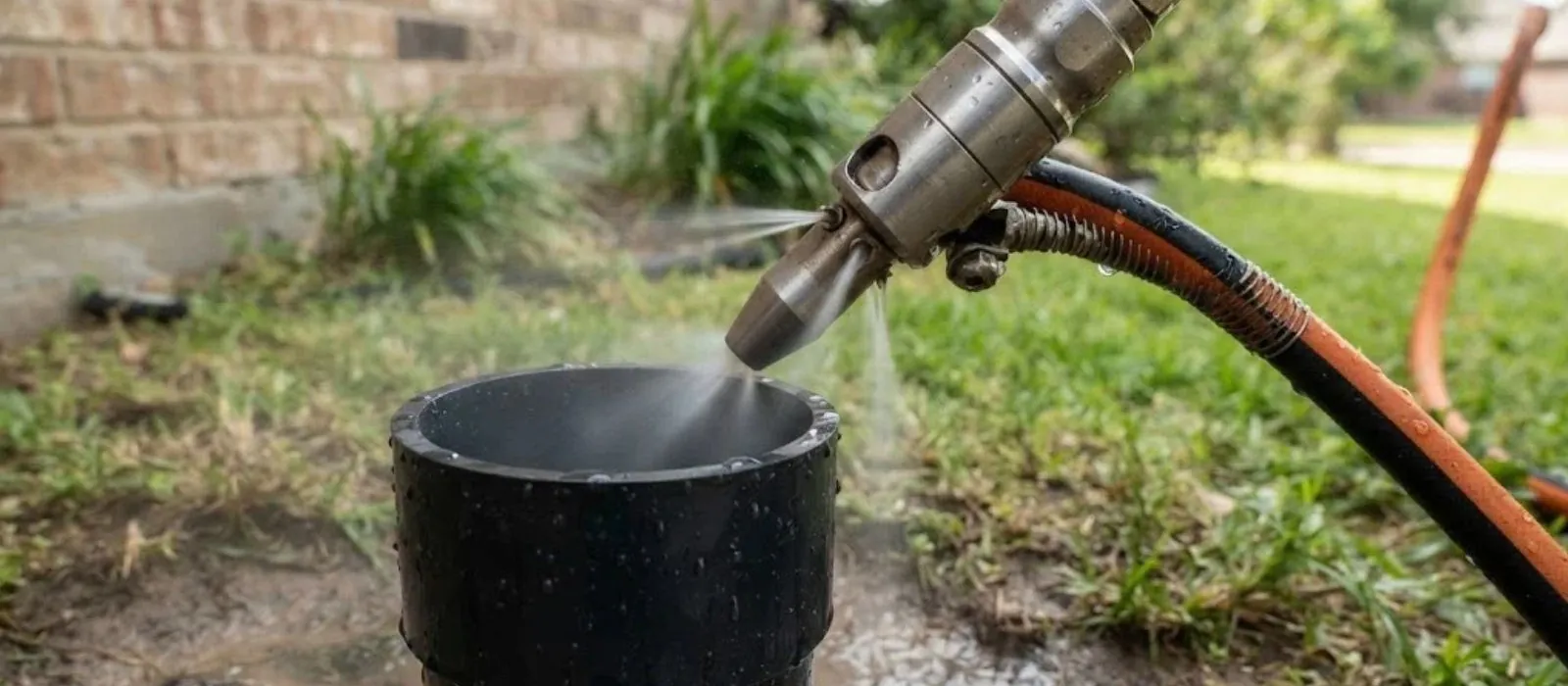
The jetter feeds a flexible hose with a rotating nozzle into the pipe through a cleanout. Water leaves the nozzle at high pressure in several angled streams, which cut the buildup loose and push it downstream while the hose pulls itself forward.
Cable snake or hydro jet: the honest comparison
Both tools have a place. A good plumber picks by what the pipe is doing.
Cable snaking
- Punches a hole through a soft plug
- Fast and low cost for one stopped fixture
- Leaves the grease coat on the pipe wall
- Roots grow back and the clog returns
- Works through tight traps in sinks and tubs
Hydro jetting
- Scours the full circumference of the pipe
- Removes grease, sludge, scale and light roots
- Leaves the pipe bore close to its original size
- Needs a cleanout or a pulled fixture for access
- Not for a pipe that is cracked, collapsed or badly offset
That last point matters. Pressure in a failed pipe can wash soil into the line or enlarge a crack, so the first step is often a short camera pass. Our sewer camera inspection page explains what the camera shows.
Grease backup shutting down your kitchen?
Kitchen drains down mid-service? Call (561) 448-8545 and say how many fixtures are slow.
What high-pressure water actually removes
Kitchen grease
Cooled fat forms a waxy lining that cable heads can only drill through. Jetting strips the lining away.
Soap and scale
Mineral film and soap residue narrow older pipes a little more each year.
Silt and sludge
Fine debris settles in low spots and holds hair and wipes in place.
Small root hairs
Light roots at a joint can be cut with the right nozzle. Thick root masses call for a cutter first.
Kitchens along the Forest Hill Boulevard corridor
Forest Hill Boulevard runs east to west through the village, and the Mall at Wellington Green is on it, with shops and restaurants close by. Commercial kitchens that serve a steady flow of customers send much more fat and food solids into the drain than a house does. The practical payoff is that a restaurant or food counter on a busy corridor does better with scheduled jetting than with waiting for the next backup.
Grease is the same problem in houses, only slower. If you manage a food business in or near Wellington, ask a plumber about a cleaning interval for your own lines, and see our commercial plumbing page for after-hours work.
How a jetting visit runs from start to finish
The sequence below is the usual one. The plumber adapts it to the pipe.
- 1
Camera first, if the history calls for it
A quick look confirms the pipe is sound enough to jet and shows how heavy the buildup is.
- 2
Open an access point
A cleanout cap is best. Without one, a toilet may need to come off its flange.
- 3
Choose the nozzle
Forward jets cut through a plug, rear-facing jets pull the hose along and scour the walls on the way back.
- 4
Jet in passes
The plumber works downstream, then pulls back slowly. Water and debris travel to the main.
- 5
Run a final check
Flow is tested and a second camera pass can show a clean wall.
Is your drain a jetting candidate?
Check these before you call. They help the dispatcher send the right gear.
- Two or more fixtures drain slowly at the same time.
- The same line has been cabled more than once in a year.
- Water gurgles in a tub or shower when a toilet flushes.
- A kitchen line smells sour even after the trap is cleaned.
- The building has a grease trap or interceptor that has not been serviced lately.
- No cleanout is visible, which you can mention so the crew plans for access.
If you checked three or more, say so on the call. Deeper trouble with the main may lead to sewer line cleaning on the same visit.
Why hydro jetting is priced by the job
A single quote number would hide what matters, so the technician looks at the line first and then names a clear price before work starts.
Insurance usually pays for sudden, accidental damage, not for gradual grease buildup. Ask your carrier before assuming coverage.
Before the jetting crew arrives
Stop adding water
Turn off the dishwasher and hold off on showers. Water you add may surface in the lowest drain.
Clear a path
The hose reel is large. Move cars, bikes and planters near the cleanout.
Know the history
Note when the drain was last cleared and what was used. It saves a guess.
Questions homeowners ask
Yes. The 24/7 line is open 24 hours every day, including nights, weekends and holidays. A licensed plumber is sent when one is available, and you hear the price before work starts.
Tell the dispatcher if a business must open soon, so the visit can be planned around it.
On sound pipe, pressure is matched to the pipe size, which keeps risk low. On a cracked, collapsed or very old fragile pipe, jetting can make things worse, which is why a camera look often comes first.
For grease, scale and repeat clogs, yes, because it cleans the whole pipe wall. For one stopped sink with a soft plug, a cable is faster. Our drain cleaning page explains when that fits.
Length, buildup and access decide it, and a short branch is quicker than a long sewer lateral. The plumber gives a time estimate once the line is open.
It cuts light roots and clears fines, but roots that entered through a cracked joint will return. A repair of the joint is the lasting fix.
Many Wellington houses date from the 1980s and 1990s, and a camera check first tells whether the pipe can take the pressure.
We do. Our Royal Palm Beach service page lists the ZIP codes, and the same line applies.
Still have a question? Call (561) 448-8545