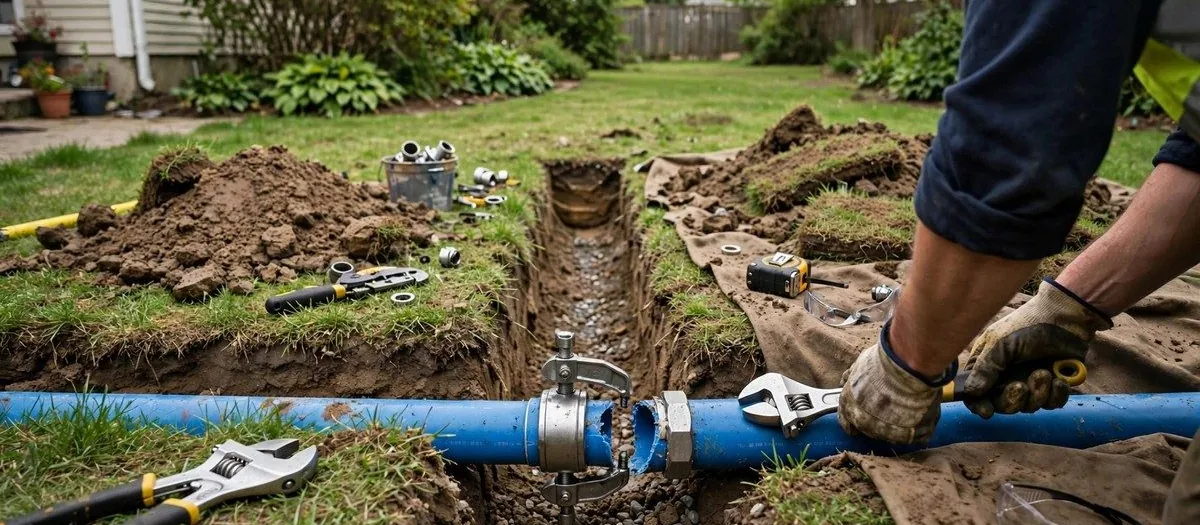
Signs the water service line is leaking or broken
A service line is buried, so the evidence is indirect. These are the clues we ask about first.
Pooling with no rain
A wet, spongy spot between the meter and the house, especially on dry days, is a strong hint.
Pressure falls everywhere
Showers, taps and the washer all weaken together, which points upstream of the house plumbing.
Dirty or cloudy water
Sediment can enter when a break lets in soil or when pressure swings.
Meter moves with the main closed at the house
If the dial turns after you shut the house valve, water is escaping on the line side.
Sinkholes or sunken pavement
Water washing out soil leaves dips in the lawn or edge of the driveway. Keep clear of them.
Whose water line is it, and who do you call?
Wellington Utilities supplies drinking water to about 56,000 residents in its service area, but addresses east of State Road 7 are served by Palm Beach County Utilities instead. Check your water bill to see which utility serves you, because that decides who handles a main break in the street.
The village says indoor plumbing is ultimately the responsibility of homeowners. Ask your utility where its responsibility ends before you hire a trench crew. A street main break goes to the utility, not a plumber, and the village publishes an after-hours line for it.
A new service line is a plumbing job under the Florida Building Code, Plumbing volume, which is based on the International Plumbing Code (IPC). Permit needs vary by job, so ask the Building Division what yours requires.
What to do if you think the line has failed
A short sequence keeps damage down and sorts out who needs to be called.
- 1
Close the house main
Turn the valve at the house first, a round handle clockwise or a lever a quarter turn. If the meter dial still turns, the leak is on the buried line between the meter and the house.
- 2
Check the meter box
Lift the lid with care. If it is full of water and the dial turns, ask your utility where its responsibility ends.
- 3
Photograph the area
Take a picture of the wet patch, the meter and the valve. This helps the utility and your insurer.
- 4
Call the utility if the street looks wet
If water flows from the street or meter itself, call your utility. For the pipe between the meter and the house, call us.
- 5
Call us for the property side
Describe what you see and what the meter does. Same-day appointments are offered when available.
Soggy yard and weak pressure?
Wet patch in the lawn? Call (561) 448-8545 and say where the meter is.
Repair, replace or bore: how the choice is made
The right fix depends on the break, the pipe and the route. A leak detection visit confirms where the break is before anyone digs.
| Situation | Usual fix | Digging needed | Notes |
|---|---|---|---|
| One break on a sound line | Spot repair with a coupling | A short trench | Quickest and least disruptive |
| Line is old or brittle | Replace the whole run | Full trench or a trenchless route | Cost depends on length and what is above the line |
| Break under a driveway or patio | Trenchless pull or a bore | Entry and exit pits | Preserves hardscape, depends on soil and route |
| Break close to the house wall | Spot repair or reroute | Careful hand digging | Watch for the slab and the foundation |
The plumber explains which row fits your property and shows the price before work starts.
Why lines under the lawn fail
Soil moves, roots lean on pipe, and old fittings corrode. In Florida, where the ground is often wet, a small leak can soak the soil and look like a seasonal soggy spot for a long time. That is why we prefer to confirm a leak with pressure and flow readings rather than guess from the surface.
Pipe age matters too. We identify the pipe material before quoting a repair, so you know whether a spot fix will hold or the whole line is a candidate for replacement.
A line that has just been repaired can still leak at a different spot if pressure is high. We test pressure and, where needed, install or adjust a regulator.
A meter-box leak versus a house-side leak
Where the water shows up changes who you call first.
Water in the meter box
- Water in the box that keeps refilling
- Leak at the utility's fittings
- Ask your utility where its responsibility ends
- Photograph and note the time
Wet ground between meter and house
- Wet patch between meter and house
- Meter moves with the house main closed
- A licensed plumber locates and repairs it
- We explain the cost before work starts
Not sure where the leak is? Say so on the call. Photos and the meter behavior tell a lot.
Before we arrive
Mark the route
If you know where the line enters the house, mark it with a stake or tape.
Move vehicles
Clear the driveway and the lawn near the dig site.
Have water for essentials
Fill a few containers before the main is closed for the repair.
Secure pets and kids
Soft ground and open trenches are dangerous.
What decides the price of water line repair
A water line job can be a quick coupling or a full replacement. We look at the details first and give a clear price before work starts.
Insurance often covers sudden, accidental damage, while slow leaks and wear are commonly excluded. Check your policy before you approve work.
Questions homeowners ask
Yes. We are open 24 hours a day, every day, and a dispatcher answers at any hour. Same-day appointments are offered when available.
Close the house main while you wait.
The utility does. Call Wellington Utilities or Palm Beach County Utilities, depending on which one bills you. If the leak is on the pipe between the meter and the house, call a licensed plumber and ask your utility where its responsibility ends.
We pressure test the line, listen along its route and trace it to the spot. Then we dig only there.
Yes, when the pipe is old or leaking in several places. We explain the options and the price first. Related jobs such as burst pipe repair may overlap.
If a leak shows up right after a meter swap, call us and the utility.
Yes. Our Royal Palm Beach emergency plumbing page explains which addresses we serve there.
Still have a question? Call (561) 448-8545