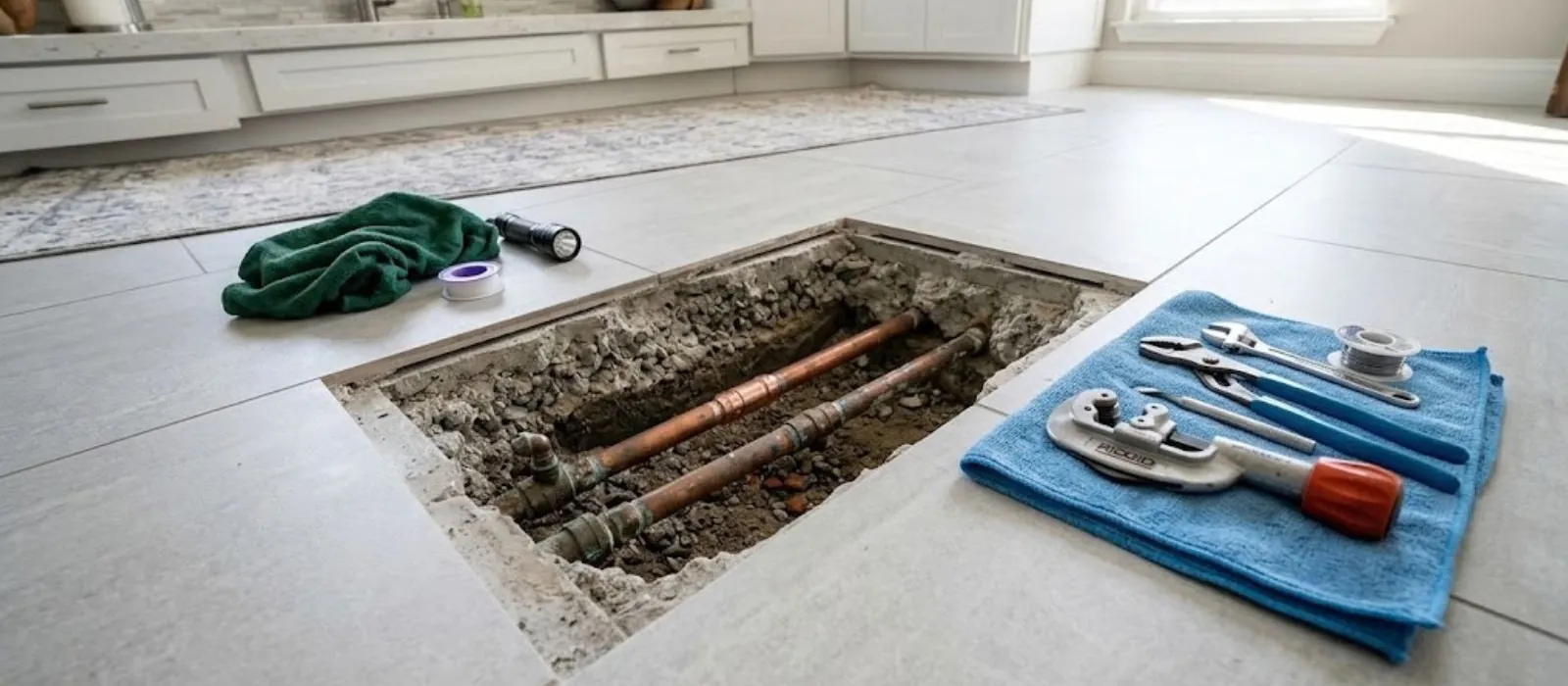
Signs of an active leak under the slab
Slab leaks hide, but they leave a pattern. Two or three of these together are enough to justify a call.
A hot spot on the floor
A leaking hot line warms the concrete above it. Bare feet find it before any gauge does.
Moving meter, dry house
Every tap is off, nothing is visibly wet and the dial still turns. The water is going somewhere you cannot see.
Sound of running water
A faint hiss or trickle from the floor at night, when the house is quiet, often means pressurized water escaping.
Damp carpet or lifting flooring
Baseboards that swell, grout that darkens or laminate that cups all point to moisture coming up from below.
Low pressure and a surprise bill
Pressure drops at several fixtures and the next bill is higher than anything in your records.
Why lines under concrete fail
Many South Florida homes sit on concrete slabs, so supply and drain lines often run in or under the slab. A line that runs through concrete is exposed to shifting soil, a high water table (common in South Florida), friction against sharp edges and, over time, corrosion from the inside.
The land around Wellington was drained by the Acme Improvement District, created by the state in 1953, because it was frequently water-logged. The practical meaning is simple: ground moisture is part of life here, and a slow leak under a slab can hide for a long time because the soil already looks wet.
Pipe age matters too. Homes built from the late 1970s into the 1990s may contain polybutylene supply pipe, a plastic associated with leaks. Copper can develop pinholes. We look at what your house actually has before suggesting a fix.
Three ways to fix a slab leak
The right choice depends on how many breaks exist, where they are and what the pipe looks like. A leak detection visit comes first, because a repair that targets the wrong spot just moves the cost.
| Option | Best for | What it involves | Trade-off |
|---|---|---|---|
| Spot repair through the floor | One clear break in an accessible area | Cut the slab at the marked spot, replace a short section, patch the concrete | Floor covering is disturbed, the rest of the old line stays |
| Reroute overhead | A bad line or several breaks along one run | Cap the slab line, run new pipe through walls or attic | More pipe, but little concrete cutting |
| Repipe the affected loop | Aging or repeat-failing pipe | Replace the whole line with new material | Biggest job, the most lasting result. See repiping |
We lay out all three with a price when the site allows it, so you pick with numbers in front of you.
Warm floor, moving meter?
Hot tile and a spinning dial? Call (561) 448-8545 and mention both.
What happens on a slab leak call
Not every slab leak is an emergency to the minute, but standing water in the house is. Here is the order we work in.
- 1
Confirm it is the slab
We close the main, watch the meter and rule out a fixture, an irrigation line or a leaking water heater.
- 2
Pressure test the lines
Isolating hot from cold shows which side is losing pressure and narrows the run.
- 3
Pinpoint with listening gear
Acoustic equipment hears the escaping water through the floor, and a thermal camera shows the warm hot-line path.
- 4
Present options and a price
You get the repair choices, what each disturbs and the cost before we start.
- 5
Repair, test and close up
After the fix, we pressure test again and flush the lines. Flooring or concrete patching may be a separate trade.
Reading the bill when a slab leak is possible
The Village of Wellington's billing FAQ names leaky fixtures and irrigation as the most common causes of high usage, so rule those out first. A bill that stays high after toilets and sprinklers check out is a stronger hint of a buried or slab line.
If the village has swapped your meter recently, photograph the new meter face and repeat the still-meter test before drawing conclusions.
Before you call about a suspected slab leak
Two minutes of checking helps the dispatcher send the right gear.
- Meter test. Turn off everything that uses water and check whether the leak dial moves.
- Hot or cold? Turn the water heater off for an hour and see whether the warm spot cools. A cooler floor suggests a hot line.
- Mark the spot. Put a piece of tape on the warm or damp area so the technician starts there.
- Note the symptoms. Pressure changes, sounds and the time you first saw them all narrow the cause.
If you also see a wet ceiling in a room below a bathroom or find water on the floor near an outside wall, mention it too. Those clues can point elsewhere. Our burst pipe repair team handles a pipe that has let go suddenly.
While you wait for the plumber
Shut the main
Turn a round handle clockwise until it stops, or turn a lever a quarter turn across the pipe. If it is stuck, do not force it. Tell the dispatcher.
Protect the floor
Pull rugs back, lift furniture legs onto foil or blocks, and run a fan if the area is damp.
Skip the additives
Sealants and additives do nothing for a slab leak and can harm pipes.
What drives the cost of slab leak repair
A slab leak can be a short, tidy job or a much bigger one. The factors below explain the difference, and we put the price in front of you before work begins.
Insurance may respond to sudden water damage, though wear and slow leaks are often excluded. Policies differ, so read yours or ask your agent before approving work.
Questions homeowners ask
Yes. The line is open 24 hours a day, every day, and after-hours calls reach licensed plumbers. Same-day appointments are offered when available.
Close the main valve while you wait if water is spreading.
Slab leaks often show as a warm floor, damp flooring or a moving meter with no visible water. Wall leaks usually stain drywall or bubble paint. A technician confirms with pressure tests and listening gear.
Not always. If the line can be rerouted through the attic or walls, the slab stays intact. Spot repairs do require a cut, and we explain that before we start.
Many South Florida homes are, but check your own. A single story with a concrete floor at grade is a strong sign. A technician can confirm on site.
Yes. We cover the village just northeast of Wellington. See our Royal Palm Beach emergency plumbing page.
Timing depends on the method and access, and a spot repair is usually quicker than a reroute or repipe. The technician gives a time frame once the break is located.
Usually yes for rerouting, though water is off for part of the job. Cutting concrete is noisy and dusty, so plan for that room.
Still have a question? Call (561) 448-8545