Signs your pipes are wearing out
One leak is a repair. A pattern is a warning. These are the patterns that usually lead to a repipe discussion.
Leaks in different places
A fix in the kitchen followed by a leak in the hall bath suggests the whole system is tired, not one unlucky joint.
Brown or rusty water
Water that runs discolored when first turned on, especially from older steel lines, points to internal corrosion.
Low pressure everywhere
Mineral and rust buildup narrows pipe from the inside. Galvanized steel is especially prone to this.
Blue-green stains
Green crust at copper joints or pinhole sprays in copper tubing mean the metal is thinning.
Rising bills, no visible leak
Unexplained usage can come from a hidden pinhole. A leak detection visit can confirm before you commit to a repipe.
Pipe materials: what each means for your home
Three older materials turn up in repipe estimates, and the replacement options differ in cost and behavior.
| Material | Common trouble | Typical replacement |
|---|---|---|
| Galvanized steel | Rust inside the pipe, low pressure, brown water | Copper or PEX |
| Copper | Pinhole leaks from thinning, corroded fittings | Repair a section, or repipe if widespread |
| Polybutylene (gray or blue plastic) | Associated with leaks at fittings and in the pipe | PEX or copper |
| CPVC | Becomes brittle with age and heat | PEX or fresh CPVC for short runs |
A technician confirms what you actually have by looking, not by assuming from the age of the house.
Repipe or galvanized replacement: when to commit
Galvanized steel was a common supply pipe in older construction. It corrodes from the inside, so the pipe may look fine outside while the bore shrinks to the width of a pencil. If the lines in your house are galvanized and you notice low flow, rusty water or leaks at threaded joints, replacement is usually the cleaner answer than repairs.
Partial repiping is possible when only one branch is the problem, for example a single bathroom group. Whole-home repiping costs more at once but removes the pattern of repeat visits. We walk you through both and let you decide.
Thinking about a repipe?
Call to talk through your pipes with a licensed plumber.
Copper pipe repair versus repipe
Copper lasts a long time, but it can develop pinhole leaks, split from freeze or pressure surges, and corrode at joints. A single failed section can be cut out and replaced with new copper or a transition fitting.
When pinholes appear in several runs, repair costs and wall repairs add up. At that point we compare repair against replacement, and tell you plainly which makes more sense. If a copper line has burst and is flooding, treat it as a burst pipe repair call first and plan a repipe afterward.
Home age and what it suggests
The median Wellington home was built in 1995, which puts many houses in an age band where supply pipes begin to show wear. Homes built from the late 1970s into the 1990s may contain polybutylene supply pipe, a plastic widely used in that era and later associated with leaks. That does not mean your house has it. A plumber has to look.
The practical step is simple: ask for an inspection before a leak forces the issue, Permit rules vary by job. The Village of Wellington's permit application says a separate permit must be secured for plumbing, and its own page says the small-job exemption does not cover plumbing, so ask the Building Division what your job needs.
A whole-house repipe is pressure tested before walls are closed, so leaks show up while the pipe is still easy to reach.
How a repipe project runs
Timing depends on the size of the house and how easily the walls and ceilings can be reached.
- 1
Inspect and plan
We trace the existing lines, check water pressure and note where walls or ceilings will need access.
- 2
Quote and schedule
You get a clear price before work begins, and a schedule that fits when you can be without water for part of a day.
- 3
Permit
The Village of Wellington's permit application says a separate permit must be secured for plumbing, so ask the Building Division what your job needs.
- 4
Run new lines
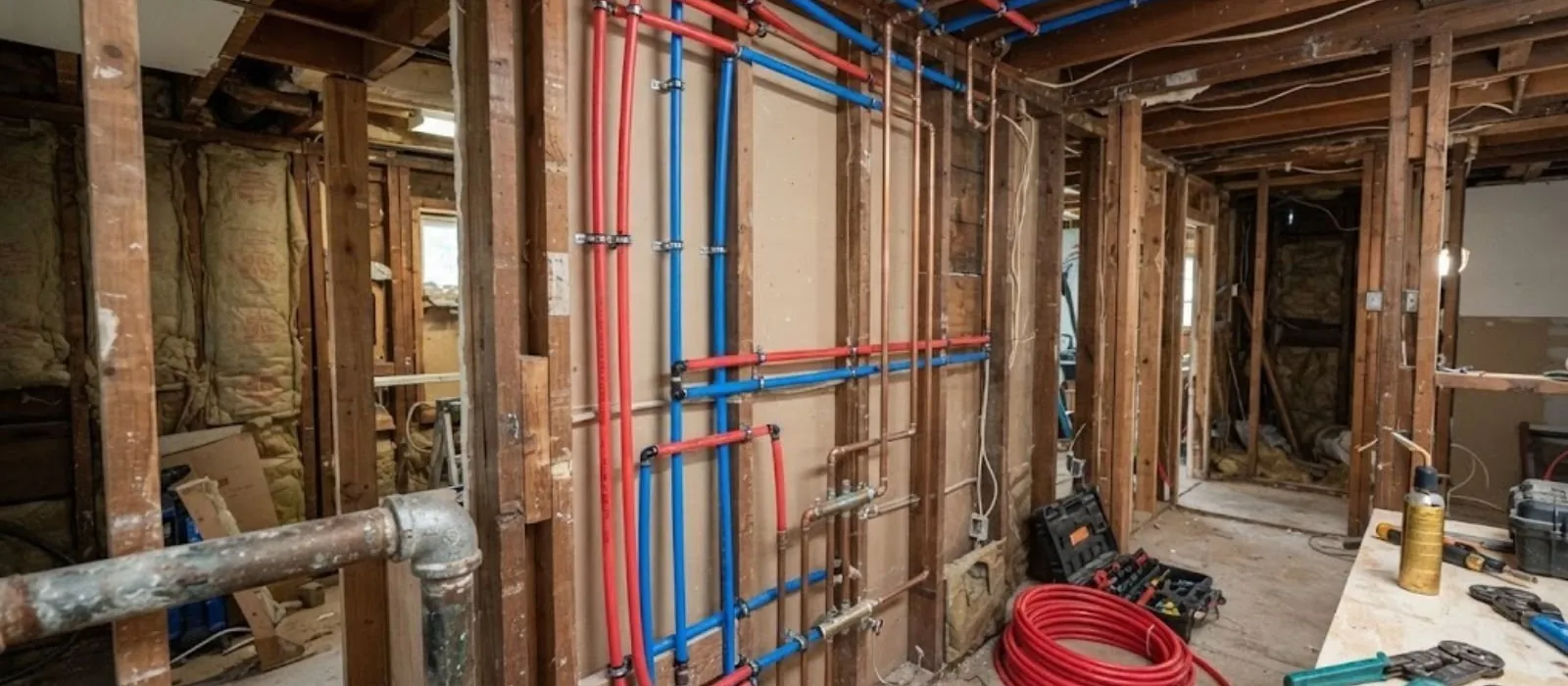
New supply pipe is routed through attics, walls and crawl areas, with shutoff valves added at fixtures.
- 5
Test and patch
The system is pressure tested before it is connected for good, then access holes are patched or left ready for a drywall finisher.
Water is shut off for part of each working day. We tell you when, so you can plan for showers, laundry and cooking.
What drives repiping cost
No two repipes cost the same, so we do not publish numbers. After an inspection a technician gives a clear price you approve before work starts.
Insurance usually covers sudden water damage, but not the replacement of pipes that simply wear out. Ask your insurer before you decide.
Questions to ask before you hire for a repipe
- Is the contractor licensed?Verify any license with the Florida DBPR. A business tax receipt is not a license.
- What material and why?Ask why they recommend it for your house and how connections to existing fixtures work.
- Who handles the permit?A separate plumbing permit is part of legal work. Ask who pulls it and who schedules inspections.
- How long is water off?Ask for a daily plan if you live in the home during work.
- Who repairs the walls?Know in advance whether patching is included.
Related plumbing work and where we serve
Repiping often goes hand in hand with a plumbing installation upgrade such as new shutoffs or a water heater swap. If a slab line is the weak point, our slab leak repair team can reroute that line overhead instead of breaking the floor.
We serve Wellington and nearby towns including Royal Palm Beach. Our line stays open 24 hours a day, but repiping itself is scheduled work.
Questions homeowners ask
Repeated leaks in different places, rusty water and low pressure throughout the house are the strongest signs. A plumber's inspection confirms it.
It depends on your home. It was widely used from the late 1970s into the 1990s and later associated with leaks. We can check and tell you what your pipes actually are.
Both work. Copper is durable and familiar, while PEX is flexible and faster to run through walls. Your plumber explains the fit for your house.
Usually yes. Water is shut off for part of each working day, and we plan around it.
The Village of Wellington's permit application says a separate permit must be secured for plumbing, and the new small-job exemption does not cover plumbing, so ask the Building Division what your job needs.
Yes, when the rest of the pipe is sound. Compare repair costs against a repipe if more leaks keep appearing. A leak detection visit can help decide.
Often it improves it, especially where galvanized pipe has corroded inside. New pipe has a clean bore.
Still have a question? Call (561) 448-8545