What changes when the heater goes in a condo
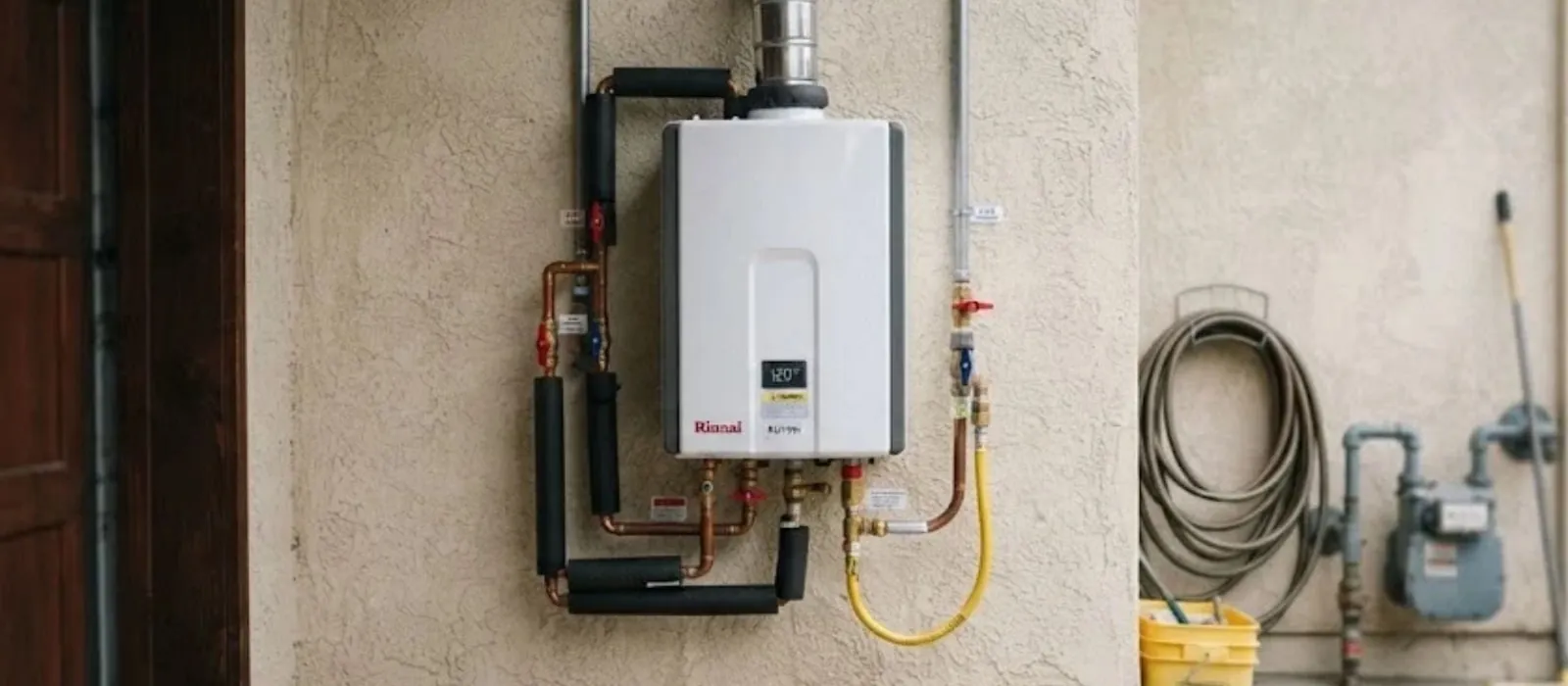
A house gives you a garage, an attic or an exterior wall. A condo or townhome often gives you a closet, a utility alcove or a balcony cabinet. That small space decides most of what is possible. A tankless unit is far smaller than a tank, but it needs clearance, a power or gas supply, a place for the drain and, for gas models, a path to the outside.
You are also sharing walls, ceilings and sometimes plumbing stacks with neighbors. Anything that leaks, vents or rattles can affect someone else, which is why associations care about it.
Electric, gas or keep the tank: how they compare in a unit
Gas tankless is rare in condos because of the venting. Electric is easier to place but harder on the panel.
| Option | Venting | Electrical or gas needs | Space | Best when |
|---|---|---|---|---|
| Electric tankless | None | Large dedicated breakers, check the amp rating | Small, wall mount | No exterior wall and the panel has room |
| Gas tankless | Sealed vent to outside, often through a wall | Gas line sized for the unit, plus power | Needs outside access | Existing gas and a clear exterior path |
| New tank | Gas models only | Same circuit as before | Closet-sized | The panel or building cannot support a tankless |
| Point-of-use mini tank | None | Standard outlet size | Under a sink | One distant sink needs hot water fast |
Ask for the rating plate of any model you are considering. Amp draw and gas input are listed there, and the plumber and electrician both need those numbers before anyone orders.
Wellington homes: owners, townhomes and the approvals that follow
Wellington has a mix of single-family homes and townhome communities, and Binks Forest has both. About 76 percent of Wellington homes are owner-occupied, according to Census survey data, but owners of condos and townhomes still need association approval.
Check two things before you order: your association's rules and the permit. Many associations require written approval for work that touches plumbing, venting or the exterior wall. Only the Building Division can confirm whether your job needs a permit at your address, so ask it directly.
Tank leaking in your unit?
Call (561) 448-8545, open 24 hours, every day, before water reaches the unit below.
The condo-specific questions to settle first
Work through these before you pay for a unit. Each one can end the plan or reshape it.
Association approval
Read the governing documents or ask the manager for the alteration form. Approval may cover the unit, the venting hole, shutoff valve access and who pays for any damage.
Venting limits
A gas tankless needs a sealed vent to the outside. If your unit has no exterior wall or only a shared roof, gas may be off the table, and electric becomes the practical choice.
Electrical capacity
Whole-home electric units pull a lot of current. Your panel size, the number of open slots and the wire run from the panel decide whether it will work. An electrician reviews this.
Space and access
The unit needs clearance on all sides and a shutoff for service. A closet that holds a tank may not allow the same clearances for a flush wall unit.
Water quality
Mineral buildup in a tankless heat exchanger lowers flow and efficiency. Ask your plumber about a service valve kit so the unit can be flushed.
The flood angle: why a tank in a unit is a risk
A standard tank holds 40 to 50 gallons. When it fails, the water goes to the floor, then to the unit below or the unit next door. Association insurance, your own policy and the neighbor's claim can all be pulled into one leak.
A tankless heater does not store water, so a failure is usually a small leak, not a flood. That alone is the main reason many condo owners ask about it. Whichever system you choose, put a drain pan with a line, a leak sensor and a clearly marked shutoff valve at the heater.
Owner or renter: who decides what
The answer depends on who owns the unit and what the lease or the rules allow.
If you rent
- The landlord owns the heater and decides whether to replace it.
- You can report a leak, no hot water or a rumbling tank, and ask for the repair.
- Do not swap equipment yourself, since that can breach your lease and the building rules.
If you own
- You decide, within association rules and permit rules.
- You carry the risk of a tank leak, so think about flood and insurance cost.
- You can ask a plumber to quote tankless, a new tank, or both, with the electrical needs listed.
If you are an owner who lets the unit to tenants, many associations want a copy of the work order and the contractor's license details before approving the job.
From idea to installed: the order to do it in
- 1
Read the association rules
Find the section on plumbing, electrical and exterior work. Note whether a contractor must carry certain insurance.
- 2
Get a site visit
A plumber checks the closet, the vent path, the shutoff and the panel, then names the price before work starts.
- 3
Get approvals and permits
Submit the association form. Confirm with the Village of Wellington Building Division whether a plumbing permit applies.
- 4
Schedule the work
Tell neighbors if water will be off. Allow for the electrician, the plumber and any inspections.
Who to call when the condo heater fails or you want tankless
Call if your current tank is leaking, if you have no hot water, or if you want a site visit to see whether a tankless can work in your layout. If the tank is leaking now, shut off the cold supply above it and the breaker, then call.
What a tankless system needs is on the tankless water heater page, and water heater installation covers location, fuel and size. Phone (561) 448-8545 to ask about a site visit. If your building sits near a town border, the Royal Palm Beach page and the service area page show where we work.
Questions homeowners ask
Often yes, but it depends on your association's rules, the vent path for gas models and the capacity of your electrical panel. Get approval in writing before any equipment is ordered.
Gas models need a sealed vent through an exterior wall, which not every unit has. Electric needs no vent but draws a large load. A site visit shows which one your home can support.
The Village of Wellington Building Division can say what your job needs. The village says its new small-job permit exemption does not cover plumbing.
That is set by each association, so the answer differs from one community to the next. Binks Forest has both single-family homes and townhomes, so rules may vary even within one neighborhood. Ask for the alteration policy.
It removes the large stored volume, so a failure is usually a small leak. Fittings, valves and supply lines can still leak, so a drain pan and leak sensor are still a good idea.
A renter can report problems and ask, but the owner decides. Swapping equipment without permission can break a lease.
It is roughly the size of a small suitcase and mounts on a wall. It still needs clearance, a shutoff and, for gas models, a vent path. Check the installation manual for exact distances.
Still have a question? Call (561) 448-8545