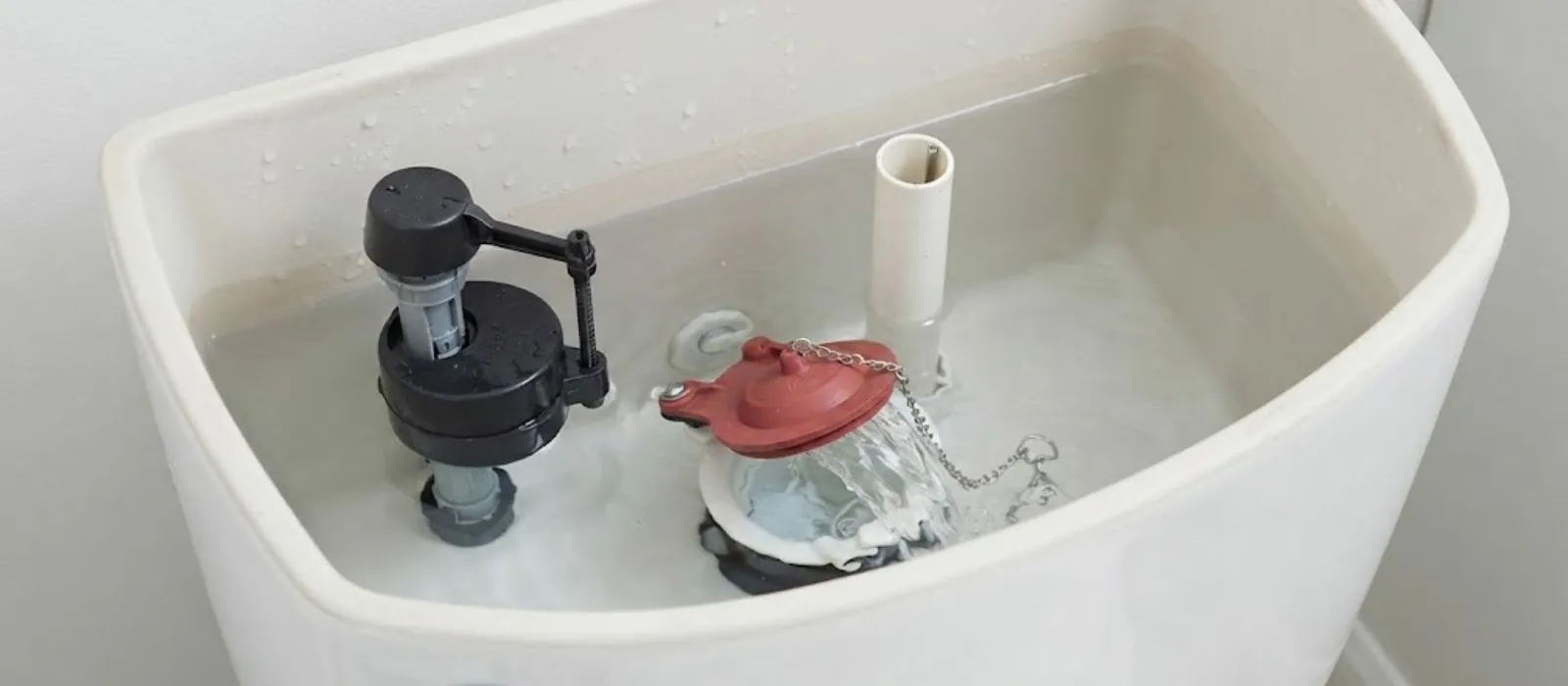
Toilet overflowing or leaking: what to do right now
Most overflows come from a clog in the trap, the curved passage built into the toilet itself. When the bowl rises toward the rim, stop flushing. Every extra flush pushes more water over the edge and into the subfloor.
Close the supply valve, take the lid off the tank, and press the rubber flapper down into its seat to cut off the flow from the tank. Then put towels at the base and call us. If the water is coming from the floor drain or other fixtures at the same time, the problem is deeper in the line, and we will treat it as a drain call.
Signs your toilet needs a plumber
Some toilet trouble is loud and obvious. Other signs look small and cost money every day they are ignored.
Water keeps running
A tank that refills every few minutes usually has a worn flapper or a fill valve that no longer shuts off. It can waste hundreds of gallons a day without any noise.
Weak or partial flush
Clogged rim jets, a low tank water level or a partial clog in the trap all cause this. The fix depends on which one it is.
Rocking at the base
A toilet that moves when you sit has loose closet bolts or a failed flange. Left alone, the wax ring breaks and sewage-smelling water seeps into the floor.
Water around the foot
Puddles at the base can mean a bad wax ring, a cracked bowl or a leaking supply line. A dry paper towel pressed around the base shows where the wet spot starts.
Repair or replace: how we decide
A new toilet is not always the answer. This table shows how the choice usually falls.
| What you see | Usual answer | Why |
|---|---|---|
| Running tank, bowl and tank look sound | Repair | Flapper, fill valve and chain are inexpensive parts and the porcelain is fine. |
| Single clog, otherwise flushes well | Clear the line | The toilet itself is not the fault. A deeper stoppage may point to the drain cleaning work we also handle. |
| Wax ring leak or loose base | Reset the toilet | Pull it, replace the wax ring or flange parts, and set it level. |
| Cracked tank or bowl | Replace | Porcelain cannot be patched safely. |
| Frequent clogs on an old high-volume model | Consider replacing | A newer gravity or pressure-assist model often clears the bowl better. |
We tell you which row you fall in before any work begins, so the decision is yours.
Toilet leaking or overflowing?
Overflow rising? Dial (561) 448-8545 and say so in your first sentence.
How a toilet replacement goes
A swap usually takes a single visit once the new toilet is on site.
- 1
Shut off and drain
The supply valve is closed, the tank and bowl are emptied, and the old supply line comes off.
- 2
Lift and inspect the flange
The old toilet is unbolted and removed. We check the flange for cracks, rust and height, because a damaged flange ruins a new wax ring.
- 3
Set the new toilet
A fresh wax ring or seal goes down, the bowl is seated, and the closet bolts are tightened evenly so the porcelain does not crack.
- 4
Connect and test
The new supply line is attached, the tank is filled, and we flush several times while checking the base and connections for any weep.
Water treatment and the rubber inside your tank
Chloramines are the Village of Wellington's normal disinfectant. Chloramine can shorten the life of rubber flappers and seals, which is one reason a flapper may need changing sooner than you expect.
The village also says that leaky fixtures are among the most common reasons for high water use. A running toilet is the quietest of those leaks, so a bill that creeps up is worth a tank check. Check your water bill to see whether the village or Palm Beach County Utilities serves your address.
What affects the cost of toilet work
A flapper swap and a full replacement with a new flange are very different jobs. We do not quote numbers over a web page. A technician sees the toilet, then gives you a price you approve first.
Sudden overflow damage may be covered by homeowners insurance, while slow leaks and wear usually are not. Ask your insurer before the repair so you can keep photos and the plumber's notes.
While you wait for the plumber
These small steps limit damage and speed up the visit.
Stop the water
Close the supply valve behind the toilet by turning it clockwise. If it will not move, close the main shutoff for the house.
Protect the floor
Lay towels around the base and pull up any bath mats. Move rugs and anything stored near the toilet.
Skip the plunger if it overflowed
Plunging a full bowl splashes dirty water. Let the plumber clear it with the right tool.
Clear the way
Open the bathroom door fully and note what was flushed. That detail helps us find the clog fast.
After-hours toilet calls across the village
A toilet can fail with a houseful of guests on a Saturday night or over a holiday weekend when everything else is closed. The line is open day and night, and same-day appointments are available when the schedule allows. Whether it is a single bathroom in a family home or the guest bath in a rental, the process is the same.
If a toilet keeps clogging despite repeated plunging, the trouble may be in the branch line. We also serve Royal Palm Beach. For recurring stoppages, a camera look or line cleaning usually finds the cause, and if a faucet in the same bathroom is also misbehaving, our faucet repair crew can handle both in one trip.
Questions homeowners ask
Yes. The line is open 24 hours a day, every day. Same-day appointments are available when the schedule allows, and the price is given before work starts.
It is urgent in the sense that water is leaving the tank for the drain all day. Close the supply valve and call. Most cases are a worn flapper or fill valve.
Often yes, when the schedule allows. If you have a toilet picked out, tell the dispatcher. If not, the technician can help you choose a model that fits your bathroom.
Wipe the supply line and valve dry, then watch them for a minute. Drips there point to the line. Water that appears only after flushing usually comes from the base seal.
Sometimes. An older high-volume model may flush poorly, but a clog that returns across every fixture means the drain line needs attention, not the toilet.
Always. A wax ring that has been compressed once will not seal reliably a second time, so a new seal goes in with every reset.
Still have a question? Call (561) 448-8545