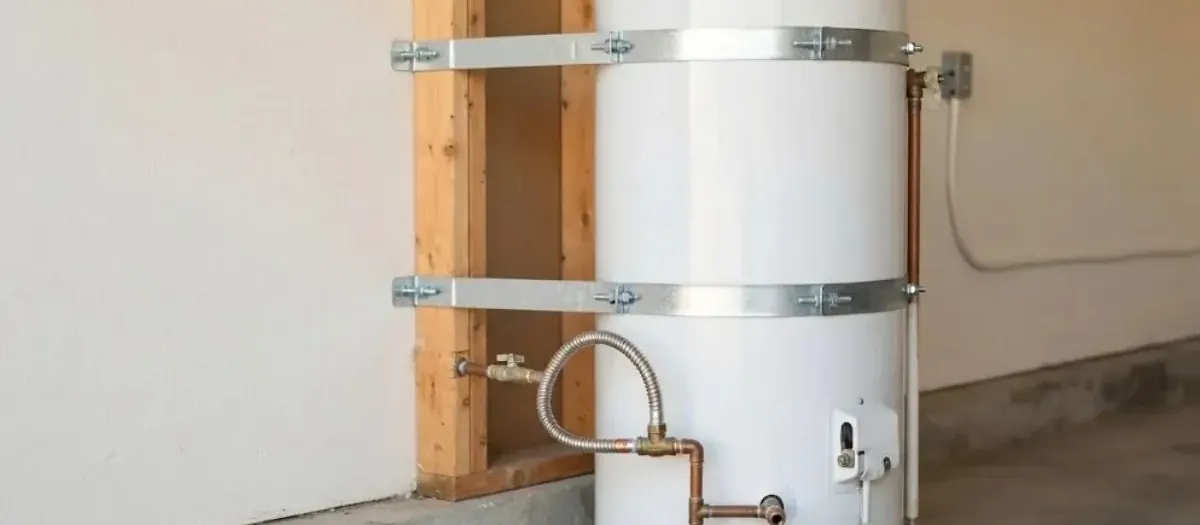
What counts as a worn-out water heater
A water heater is worn out when the steel tank can no longer hold water safely, or when the cost of keeping it running passes the value of the time it has left. Parts like heating elements, thermostats and gas valves can be swapped. The tank cannot.
Inside every tank, a rod called the anode sacrifices itself to slow rust. Once that rod is used up, the tank wall starts to corrode from the inside. That slow process is why most tank failures come with little warning and a lot of water.
Repair or replace: a quick decision table
Use this table as a first sort. The more rows that land in the right-hand column, the more a new unit makes sense.
| What you see | Usually repair | Usually replace |
|---|---|---|
| Age of the unit | Under about eight years, with a single failed part | Past ten years, or the second repair in a short span |
| Water location | Drip from a fitting, valve or the relief line | Water seeping from the tank body or the base |
| Rust | Surface rust on a pipe fitting | Rust streaks on the tank, or rusty hot water only |
| No hot water | Bad element, thermostat or pilot | Tank leaking while the heater also fails to heat |
| Noise | Light ticking as the tank warms | Loud rumbling or popping from heavy sediment |
| Running cost | Bills steady | Hot water running out fast, bills climbing |
A rule many plumbers use: if the repair would cost about half of a new unit, and the heater is past the middle of its life, put that money toward a replacement. Your technician can give you both numbers before any work starts.
Signs a tank is near the end
None of these alone proves the heater is finished. Two or more together usually do.
Age past ten
Look for the date code on the rating label. The first letter and two digits usually give the month and year of manufacture. If you cannot find one, a plumber can read it for you.
Rust-colored hot water
If only the hot taps run brown and the cold taps run clear, the inside of the tank is likely corroding. Brown water at every tap points to the pipes instead.
Rumbling or popping
Mineral sediment settles on the tank floor. Water trapped under it boils and pops. That layer also insulates the water from the burner or lower element, so the unit works harder and wears faster.
Moisture at the base
A wet floor around the tank, rust flakes in the drain pan or a damp spot on the slab all deserve attention. A leaking tank cannot be patched.
Lukewarm showers
Short hot water supply with the thermostat set correctly can mean a failed lower element, or a tank so full of sediment that it holds less hot water than before.
Water pooling around the tank?
Call (561) 448-8545 while you shut off the cold supply.
What the village says about water heater life in Wellington
The Village of Wellington's maintenance guidance says to flush a water heater occasionally, following the manufacturer's instructions, which usually means once a year. It also says water heaters generally have a 6 to 15 year lifespan.
That range is wide for a reason. A heater that gets flushed on schedule tends to land at the long end, and one that never gets touched lands at the short end. If yours has never been flushed and is past eight or nine years old, treat the flush as a check-up, and if the drain valve sticks or the water comes out thick with sediment, start planning a replacement.
Older installs sometimes have worn venting or relief piping that a plumber will recommend replacing, so ask for a look at both during any swap.
Five-minute check before you call
You can learn a lot without tools. Walk through these in order.
- Read the label.Find the manufacture date and the tank size. Write both down, because a plumber will ask.
- Look at the floor and the pan.Check for water, rust flakes or a white crust at the pipe connections.
- Look at the relief line.The pipe can be scalding hot, so look but do not touch. If water keeps dripping from it, the relief valve is reacting to heat or pressure, and that needs a professional look.
- Test hot and cold taps.Run the hot tap into a white bucket. Rust or grit in the hot only points to the tank.
- Listen while it heats.Rumbling, hissing or popping from the tank is the sediment sound described above.
Warranty and efficiency: the parts people skip
Check the paperwork before you decide. Many tank warranties cover the tank for a set number of years but cover parts for a shorter period, and most do not pay labor. If your unit is still in the tank warranty, a manufacturer replacement may be possible, though you will usually still pay for installation.
Efficiency matters more than most people expect. A heater built a decade ago loses more heat through the tank walls than a current model with thicker insulation. Heat pump and tankless designs go further, and the tankless water heater page explains where those fit and where they do not.
When to call a plumber about your water heater
Call right away if water is pooling around the tank, if you smell gas, or if the relief valve is running steadily. Shut off the cold water supply valve above the tank, turn off the breaker for an electric unit, and keep everyone out of the wet area. For a gas smell, leave the building and call the gas utility or 911 before anything else.
If the heater is leaking from the tank body, our water heater replacement service is the right fit. If it is just not heating, or has a dripping valve, a water heater repair visit may solve it at lower cost. Phone (561) 448-8545 if you cannot tell which one you have. The service area page and the Royal Palm Beach page show where visits go.
Questions homeowners ask
The Village of Wellington's guidance says water heaters generally have a 6 to 15 year lifespan. Flushing on the manufacturer's schedule and a healthy anode rod help a tank reach the upper end.
No. If both hot and cold water run brown, the problem is usually in the supply pipes. If only the hot side is rusty, the inside of the tank is the likely source, and a plumber should check the anode and the tank wall.
Sometimes. A fresh anode helps a tank that is still sound inside. If the tank is already pitted, or the unit is past ten years, the money is usually better spent on a new heater.
No. A drip from a valve, a loose fitting or the relief line can often be fixed. Water coming from the tank body or from the seam at the base means the tank has failed and has to be replaced.
Yes, per the manufacturer's instructions, which usually say once a year. Flushing removes sediment that causes noise and wasted energy. An older unit that has never been flushed may have a stuck drain valve, so ask a plumber to do the first flush.
If it is only lukewarm or noisy, you can plan ahead. If it is leaking, waiting is the wrong call, because tank failures can release the full tank volume onto the floor. Turn off the water and power and call.
Permit rules vary by job, so ask the Village of Wellington Building Division. If you hire someone, use a licensed plumber and verify the license with the Florida DBPR.
Still have a question? Call (561) 448-8545