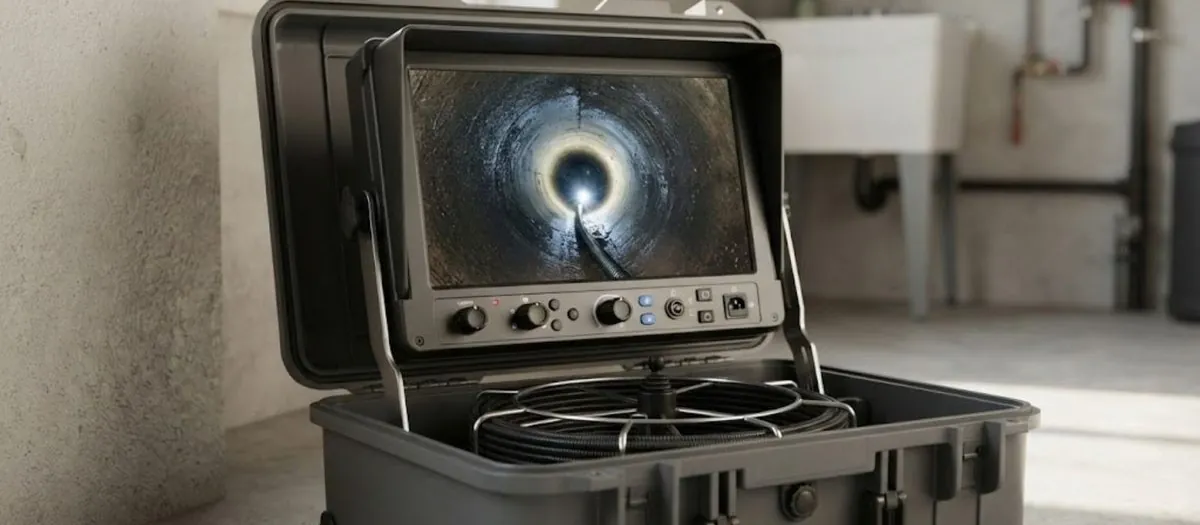
What a sewer camera inspection can find
The camera shows the inside of the pipe, which no one can judge from the outside. These are the common findings.
Tree roots
Fine roots enter through joints and cracks, then thicken into a mat that catches paper and waste. The camera shows whether they are light fringe or a full blockage.
Cracks and breaks
Clay, cast iron and some older plastic pipe can crack from age, soil movement or heavy loads. A break shows as a gap with soil or water visible.
Bellies and sags
A low spot, called a belly, holds water and waste. It may drain slowly for months and then clog repeatedly.
Offset or separated joints
Joints that have slid apart leave a ledge that snags debris and let roots in.
Scale and grease buildup
Old cast iron grows rough scale inside, and grease coats the walls. The camera shows how much of the pipe is still open.
What happens during the visit
Time on site depends on pipe length and access. Ask when you book.
- 1
Locate the cleanout
A cleanout is a capped pipe outside near the foundation or, sometimes, inside a garage or utility room. If water or sewage is standing at the cap, do not open it, because sewage can surge out. If there is no cleanout, the camera may enter through a toilet, which takes more work.
- 2
Run the camera
The technician feeds the cable and watches the screen as the camera moves toward the street. A transmitter on the camera head lets the crew find its position above ground.
- 3
Mark and note problems
Each defect is noted by depth and distance. The technician can mark the ground above a problem so you can see where it is.
- 4
Review the results
You get a walk-through of what was found, what is urgent and what can wait, plus a clear price for any repair before work starts.
When an inspection is worth booking
| Situation | Why inspect | Timing |
|---|---|---|
| Buying a home | A hidden defect can cost far more than the inspection | Before the inspection period ends |
| Repeated drain clogs | Finds the cause instead of clearing the symptom | After the second clog in a short span |
| Slow drains in many fixtures | Locates a main line restriction | As soon as it shows up |
| Large trees near the line | Roots grow toward moisture in the pipe | Every few years as a check |
| After a repair or clearing | Confirms the pipe is sound | Right after the work |
For a buyer, the camera answers a question the standard home inspection cannot. That inspection looks at what is above ground. The camera looks at what is below it.
Backup happening now?
Call (561) 448-8545 and say which drains are backing up.
Why Wellington's housing age matters for sewer lines
The median year built for Wellington homes is 1995, and more than three-quarters were built between 1980 and 2009, according to Census survey data. Many lines are therefore somewhere between fifteen and forty-five years old, old enough for joints to shift and roots to find a way in, and not old enough that anyone should assume the pipe is fine.
If a repair turns out to be needed, the Village's permit application says plumbing needs a separate permit, so the Building Division is the place to ask about your repair. Ask your plumber to explain the steps when they quote the job.
What drives the cost of a sewer camera inspection
There is no flat number that fits every house. A plumber gives you a clear price before the camera goes in. These factors shape it.
A sudden collapse may be handled differently by your homeowners policy than slow root intrusion or wear. Your agent can tell you which applies.
Questions to ask before you hire
A short list helps compare one quote to another.
- Is the plumber licensed and insured, and can you verify the license with the state?
- Will you get a recording or written report you can share with a buyer, seller or insurer?
- Does the quote say what happens if the line needs cleaning first?
- Will the technician mark the problem location above ground?
- Is the price stated before the camera goes in?
When to call a plumber for a sewer line problem
Call if sewage is backing up, if several drains are slow at once, or if you smell sewer gas near a floor drain. Stop running water in the house until help arrives, since each flush adds to the backup.
A planned look at the line is a sewer camera inspection. If the camera finds a break, root damage or a belly, sewer line repair is the next step. If you are weighing a purchase near Royal Palm Beach, the service area page shows whether we reach the property. Calls to (561) 448-8545 are taken 24 hours, every day.
Questions homeowners ask
Time on site depends on line length and access. A blockage that needs clearing first adds more. Ask when you book.
Usually not. A home inspector looks at visible plumbing. The camera looks inside the buried line, which is where costly problems can hide.
The median year built is 1995, and more than three-quarters of homes were built from 1980 to 2009. Many lines are old enough for shifted joints and root entry, so a camera look is reasonable before you buy or after repeated clogs.
The camera shows the problem. The Village's permit application says plumbing needs a separate permit, so ask the Building Division what your repair needs.
No. The cable and camera head are made to pass through pipe without harm. A badly damaged pipe could shift, which is one reason to use a trained technician.
Rental cameras exist, but reading the picture takes practice, and depth and location need a transmitter. A plumber also knows what is urgent.
It helps. Without one the camera can enter through a toilet or another opening, which takes more work. A plumber can add a cleanout during repair.
Still have a question? Call (561) 448-8545